Carnival in Guaranda

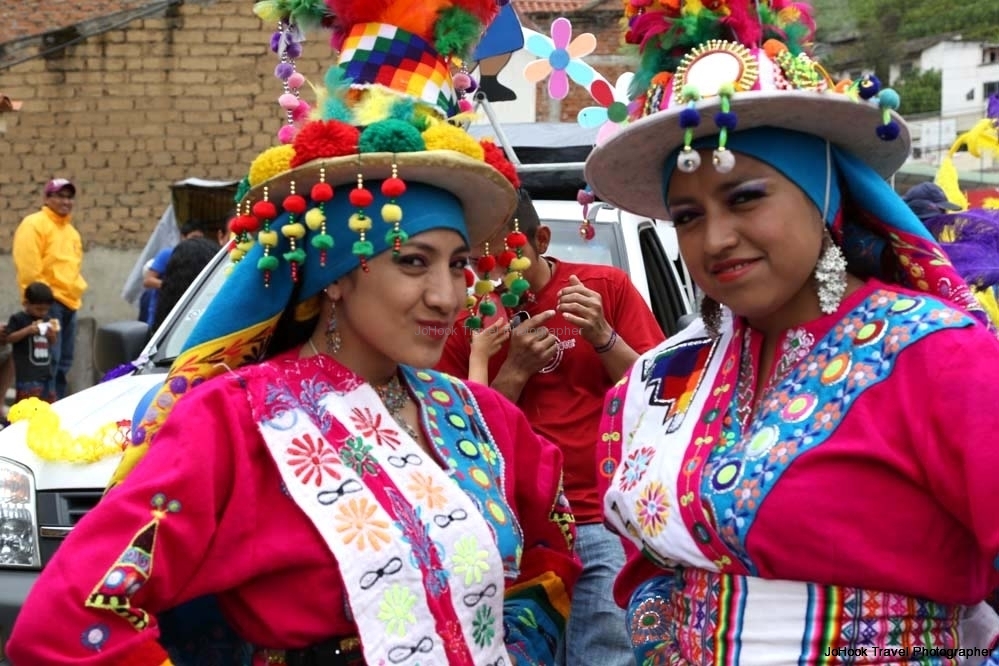
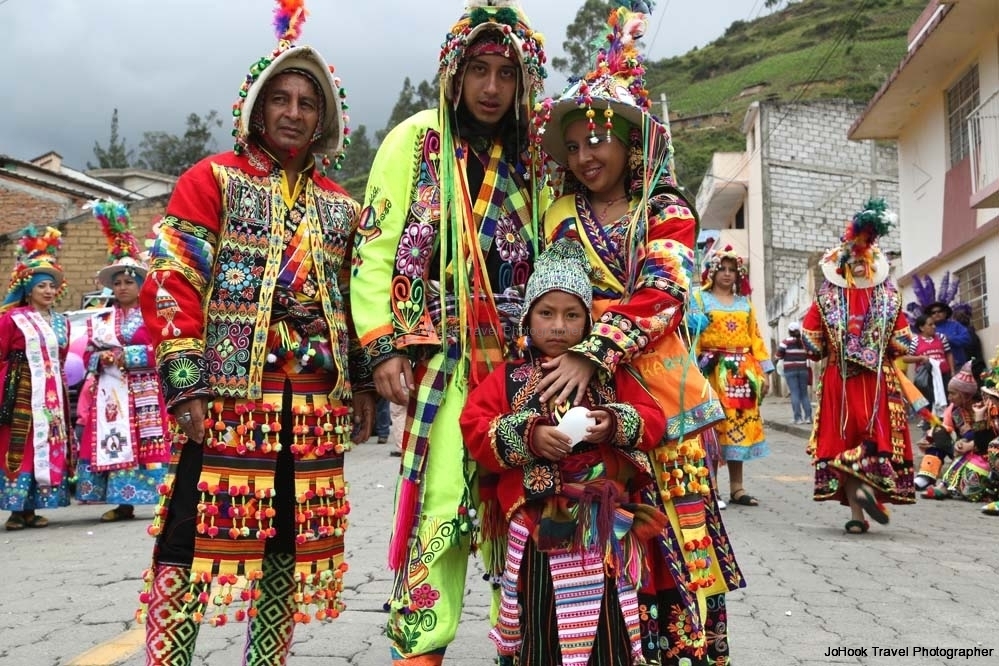
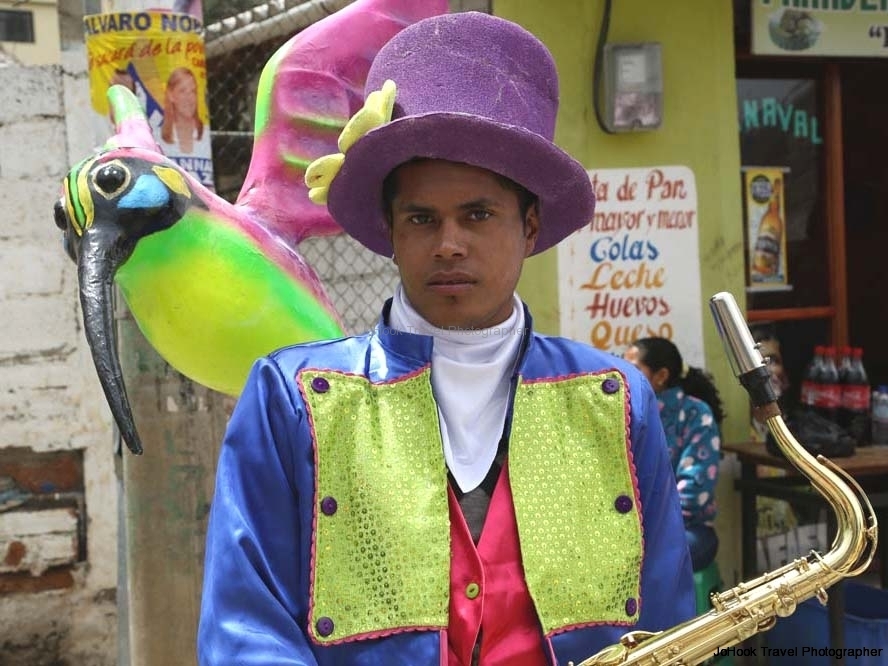
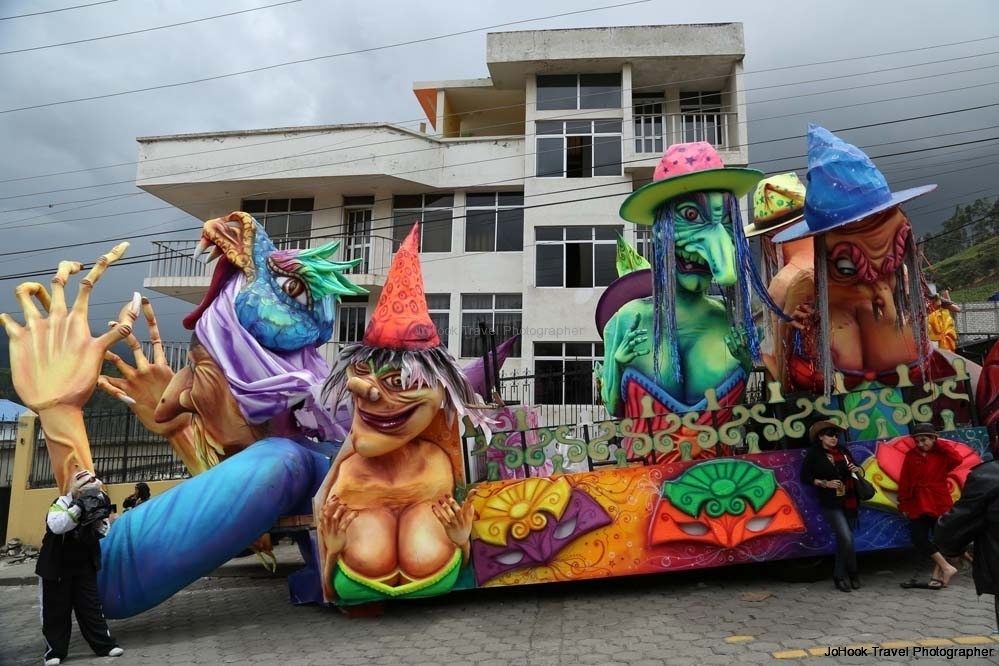
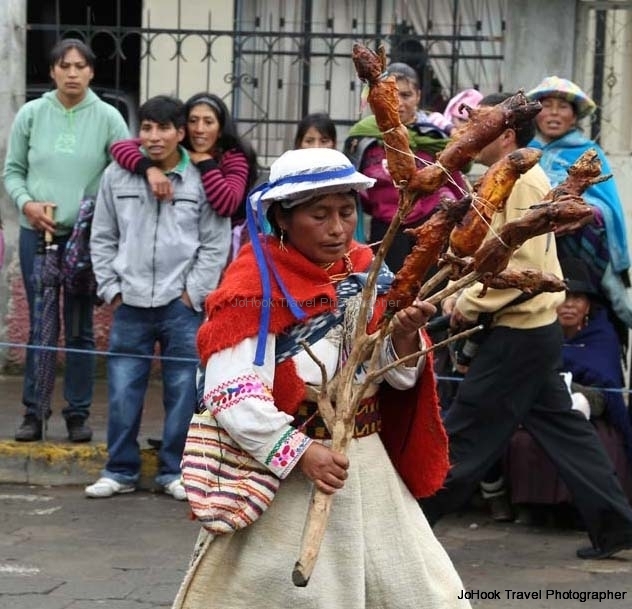
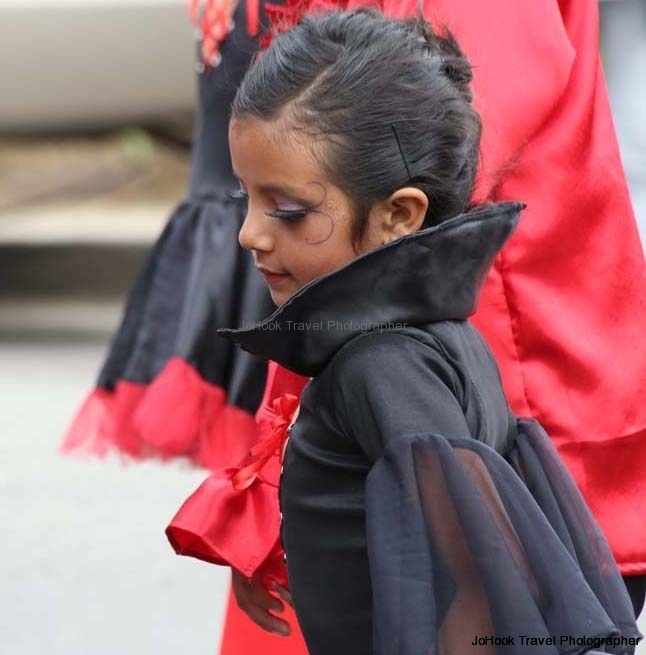
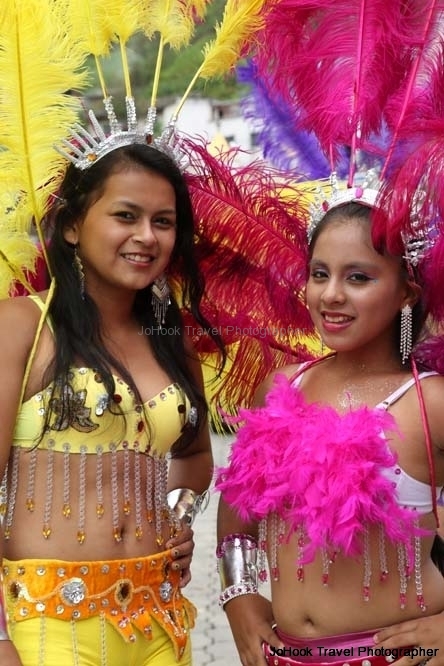
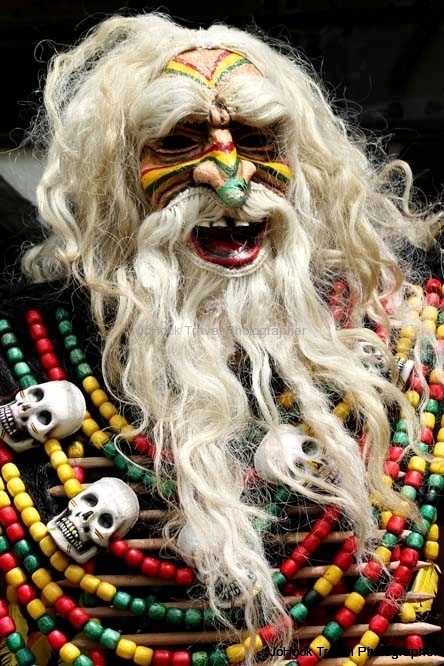
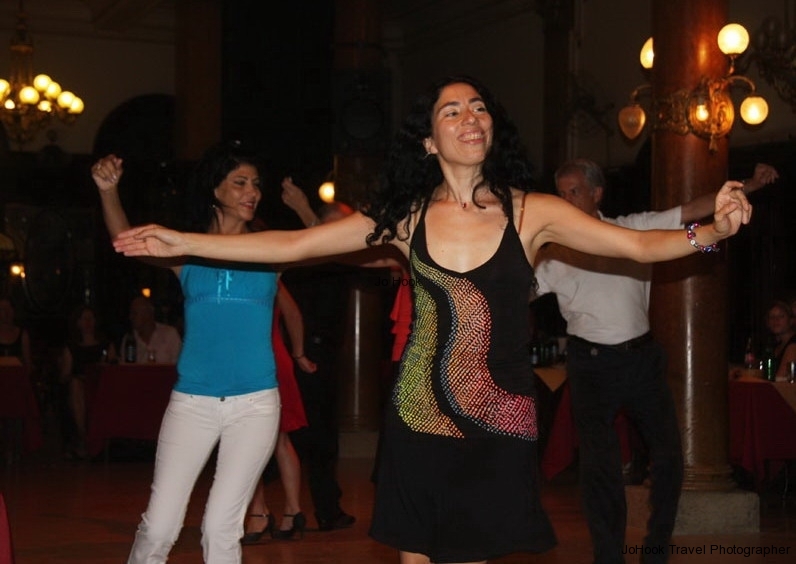
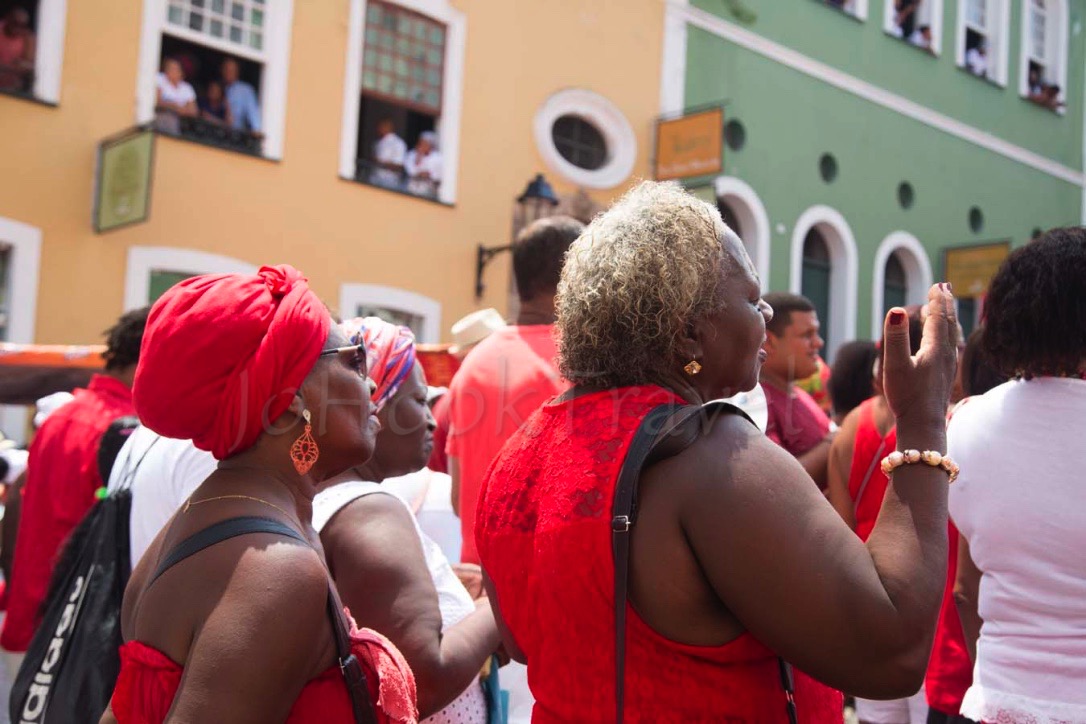
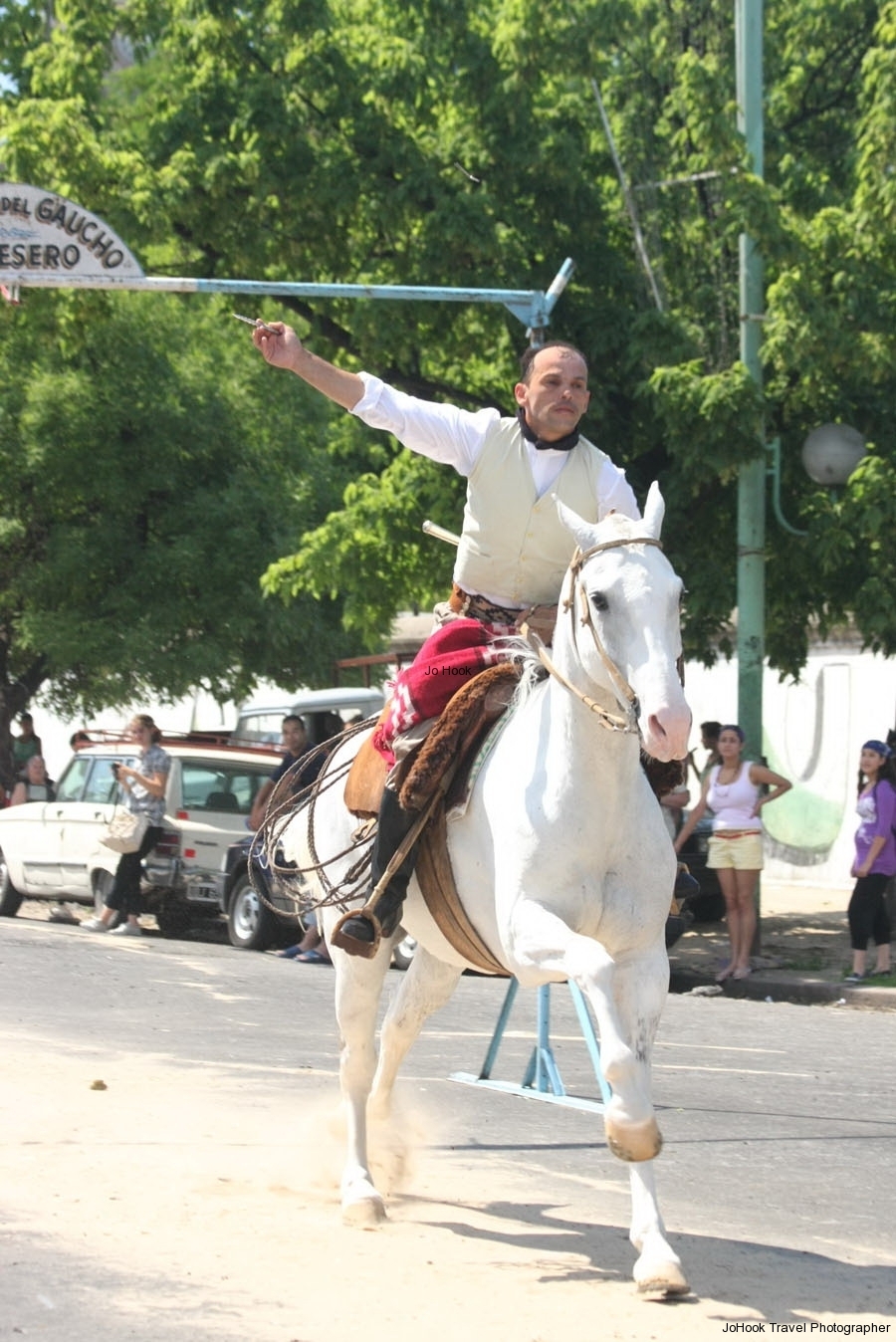
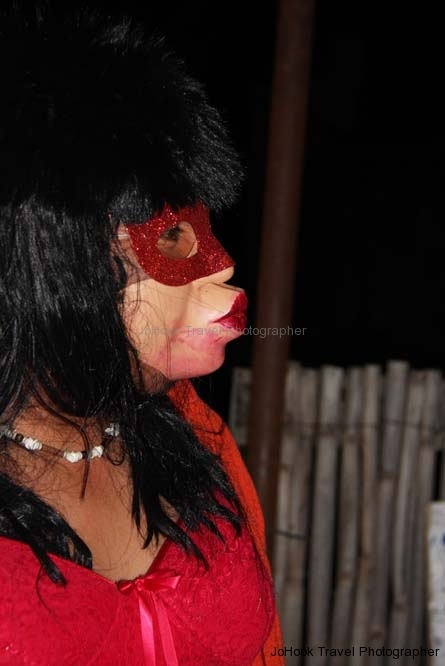
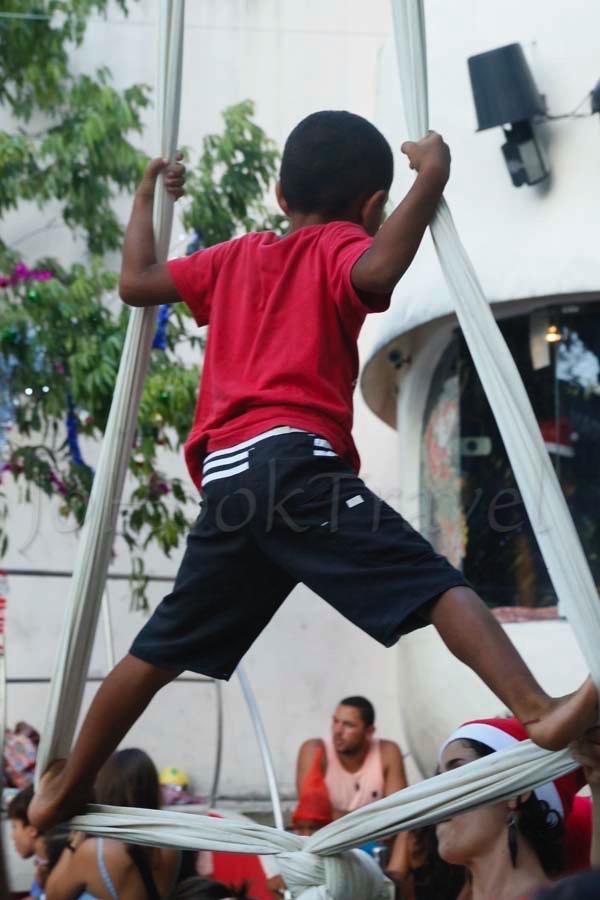
Carnival in Guaranda, Bolivar Ecuador is such fun. Deep in the Andes this small town has the best February Carnival in Ecuador. Being a tourist I was constantly sprayed with foam or water but all in good nature and more of a way to say hello. I had to keep my camera constantly under wraps to protect it though. This is a three day party event and at night the place really comes alive. The parades through the day show the poverty of the region as some groups walk with bare feet leading their pet lama or sheep. People drink chica (chicha de jora) made from corn and Pájaro Azul, a spirit from Guaranda. The smell of boiled and fried pork with corn kernels wafts it’s way to your nostrils, chigüiles, a cooked corn flour paste wrapped in a corn husk, or cuy, the famous guinea pig are cooked on open barbecues. The grand celebratory opening of the carnival features the dramatic entrance of Taita Carnaval (Father Carnival) into town wearing the traditional black hat, red cape and white red and blue scarf. Taita Carnaval is one of the local wealthy landowners and the generous sponsor of the party, earning him the gratitude and respect of party-goers. Taita Canaval, accompanied by Mama Carnaval, presides over the parades and festivities of the carnival. This celebration opening starts the three day festival, which include dressing up and wearing masks, music and dancing in the streets. The carnival dancers wear traditional costumes of gold necklaces, the Andean bowler hat , white embroidered peasant blouses covered with brightly coloured fringed ponchos and longish wide skirts which twirl as they dance.
According to legend, Guaranda’s Carnival dates back to the time of the Mitimaes, an Inca group coming from Peru. Carna and Valerio, a young couple to be married by chief Huaranga, went for a walk in the mountains. After wandering in the countryside for quite a while, they sat down and fell asleep in a field, on the Llangama river bank. When the god Gran Taita – which, as a mix of Spanish and Kichwa words, means “Great Father” – saw the young lovers sleeping, he ordered Nature to compose a song for them. Immediately, the birds sang cheerfully, the wind blew sorrowfully, the tree branches twisted up and the river waters danced playfully. All those sounds produced harmoniously a both happy and sad music. When waking up, Carna and Valerio felt touched by this symphony of nature. They sang it all the way home and shared it with chief Huaranga. The latter enjoyed the melody so much that he proclaimed the song should be played at the second moon following the winter solstice during an annual three-day Great Festival, the “Carnaval de Guaranda”. Thus, this celebration, born from Gran Taita’s will, would be a time of enjoyment for everyone, far away from daily life.
Another story behind Carnival comes from the Huarangas, an ancestral tribe belonging to the Chimbos nation. At that time, people used to honour their chief Huaranga and thank Gran Taita (also known as Pachacámac) and Pachamama, Mother Earth. During this three-day celebration held at the second moon, everyone from the area would dress up and gather to sing, play the flute, drums and panpipes, dance, drink chicha, a beverage made from fermented corn, and eat traditional dishes. They would play around, throwing corn flour or perfumed water at each other. At the arrival of the Conquistadores, as a way to impose Spaniards’ traditions, the festival turned into Guaranda Carnival, a European-inspired celebration.